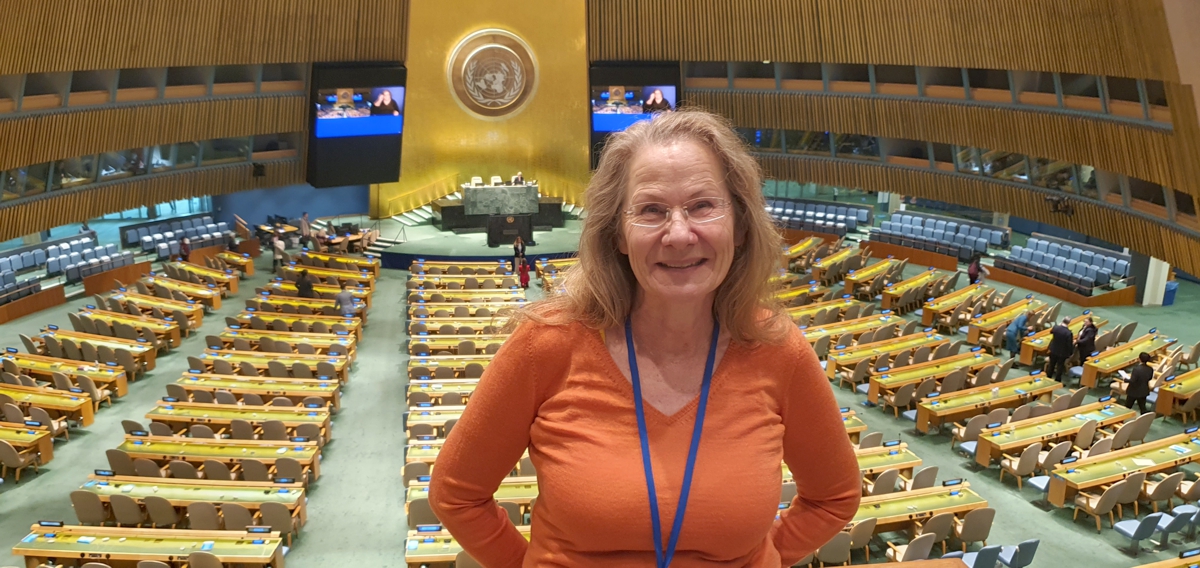
ICUUW today signed on to a declaration advancing gender justice.
Background
In December 2024 the United Nations (UN) General Assembly adopted a resolution that mandates a meeting in 2028 and 2029 with the intended outcome of an international convention to prevent and punish crimes against humanity. The Global Justice Center, in collaboration with many other organizations including ICUUW, is working on strengthening gender justice in this new convention. A working group at the UN will meet for the first time later this month, beginning the process of shaping the treaty to be negotiated formally in 2028-29. This declaration is provided as input to the working group.
Advancing Gender Justice in the Crimes Against Humanity Convention: A Declaration
We, the undersigned organizations and individuals, welcome the official start of preparatory work for a Crimes Against Humanity Convention. This is a significant opportunity to ensure an inclusive instrument that addresses long-standing gaps in the protection against gender-based crimes, particularly for women and girls. We urge states to adopt a gender-competent and intersectional negotiation process and convention, which is shaped by victims’ multidimensional experiences. We call on all states to take comprehensive action, including:
1. Recognize all gender-based harms that meet the crimes-against-humanity threshold, by codifying crimes such as:
- Forced Marriage: as compelling a person into a conjugal union through force, threat, coercion or inability to consent, consistent with established jurisprudence.
- Reproductive Violence: as intentional acts or omissions that violate a person’s reproductive autonomy.
- Gender Apartheid: as inhumane acts committed within and to maintain an institutionalized regime of systemic gender-based oppression and domination.
- Slave Trade: as acts involved in bringing a person into, and maintaining them in, a situation of slavery, and reflecting its peremptory status.
2. Center victims and survivors in the Convention:
- The Convention should deliver justice that people can access and trust—not a system that looks strong on paper but leaves victims behind.
- Victims’ perspectives, including those from marginalized groups, should shape the convention’s content, particularly with regard to prevention, accountability, and reparations.
- States should conduct safe consultations with victims on the text—including the definition of victim—and provide procedural accommodations to ensure their meaningful participation throughout the negotiations, implementation and monitoring.
- The text should define victims to include at least all persons who suffer harm from acts that constitute crimes against humanity in line with international standards and provide for prompt, full, and effective reparations.
3. Embed gender-competence across the convention’s content and process to promote equality and prevent discrimination, such as by ensuring:
- Gender-inclusive language is used throughout the text of the Convention.
- An approach that is grounded in intersectionality and gender inclusivity guides all sections of the convention, including provisions on definitions, procedure and enforcement.
- A strong non-discrimination and substantive equality clause and strong provisions for monitoring to promote implementation, progressive interpretation, and compliance are included.
- In the text, gender is understood in line with current international human rights and criminal law.
- The negotiations incorporate gender expertise and robust civil society participation, intersessional meetings on gender justice, and gender parity across delegations.