- Details
- By Zsófia Sztranyiczki, ICUUW Executive Director
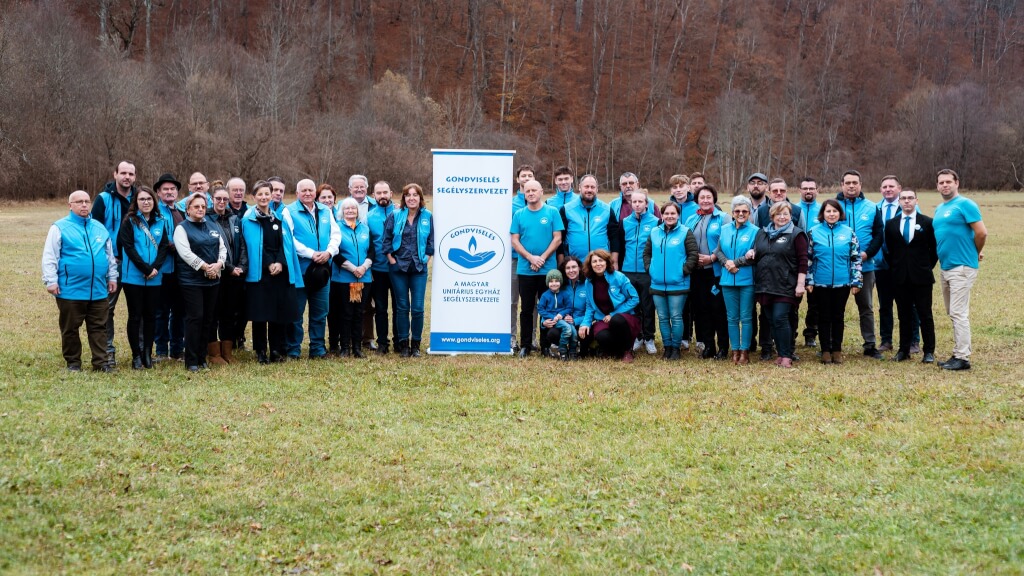
From the onset of the war in Ukraine, our partners - the Hungarian Unitarian Church and its charity organization Gondviselés (in English: Providence) - have responded to the needs of Ukrainian war refugees.
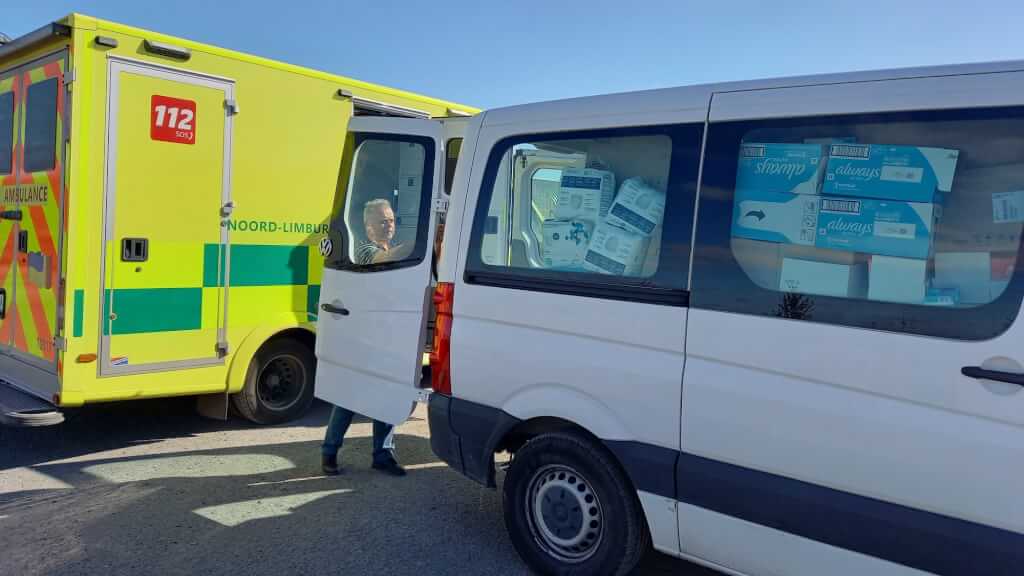
In September 2024, Gondviselés volunteers Olivér Kiss, journalist, and Vladimir Skalski, refugee from Odesa living in Cluj/Kolozsvár, undertook a life-threatening mission to deliver aid (food, health equipment, adult diapers, defibrillators) to Southern Ukraine. The transfer of the goods took place at the border crossing in Orlivka (on the Ukrainian side of the Danube's northern Dobruja section), an area that was affected by drone strikes the night before. The donations were received by the director of the Liubashivka city hospital.
- Details
- By Zsófia Sztranyiczki, ICUUW Executive Director
A week after the Russian invasion of Ukraine on 24 February 2022, ICUUW launched a large-scale fundraising effort to supply immediate assistance to families fleeing the war in Ukraine, in partnership with Gondviselés Segélyszervezet (in English: Providence Charity Organization), the charity arm of the Hungarian Unitarian Church. Thanks to over 480 ICUUW members, individual donors, UU congregations and organizations, ICUUW has sent $112,075 in support of Gondviselés's vital work for Ukrainian war refugees.
- Details
- By ICUUW Staff
In-Country Organizations ICUUW has previously partnered with:
Tunawiri Pamoja (“Let’s Grow Together”), a women-led community-based organization in western Kenya addressing unending challenges facing young women: child marriage, child pregnancies, menstrual health, sexual and reproductive health and rights, poverty, and gender inequality. Tunawiri Pamoja founder Noel Lutomia is a former member of the ICUUW board of Directors (2021-2023).
- Details
- By ICUUW Staff
In-Country Partner
In December 2014, a formal agreement of collaboration was signed between ICUUW and Seng Kynthei, the Women’s Wing of the Unitarian Union of North East India (SKUUNEI), laying the foundation of a productive exchange.
Navchetna Drug Prevention Program (2024)
The Navchetna (in Hindi: “a new consciousness”) drug prevention program - developed by the Government of India and adapted to the Khasi society - provides an opportunity for appropriately-aged life skills and drug education for school children, as well as guidance for a healthy life. The evidence-based training modules are culturally appropriate to the Khasi society, helping Unitarian children and adolescents develop life skills to face the various problems they encounter in their lives. This program has been made possible by ICUUW members contributing to a Faithify campaign. Please read the first report of the program: Training Khasi Children in Life Skills ...and Drug Education: Navchetna
COVID-RELIEF (2020-2022)
In the fall of 2020, ICUUW raised funds to provide COVID-19 awareness programs and care packages for Unitarian families in North East India, stimulate behavioral change toward stigma and discrimination of infected individuals, and address mental health impacts of the pandemic. Awareness programs also included community education and mobilization to prevent teenage pregnancies and early marriages during the health crisis. Please read the following reports:
-
The first awareness program in January 2021 COVID-19 First Training in North East India
-
The online awareness program in August 2021 Khasi Women Drive COVID-19 Prevention Programs
-
The Ri Bhoi Circle awareness program in February 2022 Seng Kynthei Ri Bhoi Circle Addresses Vaccinations, Health, and Early Marriage
Leadership Development (2015-16)
In 2015-16, with the support of ICUUW through a UU Funding Program grant, Seng Kynthei implemented six leadership development training sessions for 30 women in the Khasi and Jaintia Hills, with several follow-up trainings. Each session focused on a different topic: gender roles, gender equity, women’s rights; leadership skills; communication skills and effective communication; sexual and reproductive health; violence against women; and economic empowerment and business entrepreneurship. A handbook in Khasi (with resources and materials) has been prepared by Seng Kynthei.
Positive change attributed to the leadership development trainings is already palpable. Many women have stepped into leadership roles in their churches and communities, working alongside men at the village level.
Violence Awareness and Prevention (Ongoing)
Despite being matrilineal – where title, inheritance, residence after marriage and succession are traced through female line – the Khasi society is one in which women and girls face violence in every form and at different levels. Patriarchal beliefs of male dominance and unequal gender relations lie at the root of gender-based violence. Violence against women is a growing concern: it is “a multi-dimensional problem that requires a comprehensive prevention strategy,” as our Khasi sisters define it.
Seng Kynthei, under the leadership of ICUUW board member Elgiva Dora Shullai and longtime ICUUW member Dr. Rica Lamar, has implemented violence against women programs in honor of the International Day for the Elimination of Violence against Women (November 25). Approximately 900 schoolchildren, youth, and adults have taken part of these trainings in the last six years.
These one-day workshops, carried out in several UU communities, provide a channel to address the issue and encourage participants to stand up and speak out against men’s violence against women. The events involve speakers and interactive group work focusing on issues such as the role of women in the Khasi matrilineal society, gender roles, gender-based violence, use and misuse of power, gender equity, women’s legal rights and the various government laws that are already in place to protect, prevent, and curb violence. Participants are also acquainted with the White Ribbon Campaign: men are asked to wear white ribbons as a symbol of their opposition to violence against women, as well as pledge together to report incidences, be vigilant, and commit to ending violence.
A significant change attributed to the awareness campaigns is that rape cases are starting to be reported. Women are finally daring to break their silence and take their cases to the authorities.
- Details
- By ICUUW Staff
Thanks to funding provided by ICUUW and Ecosystem Restoration Camps USA (ERC USA), Contour Lines supported women-led tree planting efforts in Chinabenque and Socela, two indigenous communities in the mountainous region of Guatemala. A historically persecuted group, the Q’eqchiʼ Maya have been actively resisting a foreign-owned mine that has polluted nearby waterways.
The activities initiated with ICUUW are particularly important because they were run in collaboration with the local women’s associations. In both cases, the women’s associations sought out Contour Lines to implement “food forest” projects, assisted by Contour Lines’ resources and expertise. Herlinda Xo Caal, a leader of the women’s groups, coordinated the exchanges between the communities and Contour Lines. The dedication and engagement shown by female community leaders have been inspiring not only for their communities, but also for other farmers interested in reforestation models.
In accordance with Contour Lines' vision to empower farmers to maintain agroforestry systems in their communities independently, these women-led initiatives have resulted in sites that adeptly implement required food forest agroforestry methods. Through this project, the communities are improving their nutrition, food security, and climate resilience.
The activities specifically supported by ICUUW and ERC USA were part of a bigger effort occurring over three successive seasons — summer of 2021, winter of 2021-22, and summer of 2022. With each season, Contour Lines technicians trained farmers in required regenerative methods (growing legume plants on contour, use of mulch, chemical-free production), and temporarily supervised their progress to ensure that the growing methods were appropriately implemented.

Following technical training and successful first planting, the number of trees the women and their families received were increased in the subsequent seasons. Ultimately, 2,300 fruit trees were planted by 23 households. While this process was underway, Contour Lines also purchased harvests (e.g. cassava) from the two communities, bringing additional economic benefits to the women and their families.
The agroforestry systems themselves will last beyond the project funding — the planted trees such as citrus, litchi, mango, avocado, and zapote will bear fruit for decades. Over time, the rows of legumes that form living terrace walls in between the tree rows will work with the tree root systems to control soil erosion and accumulate fertility for the future. The food forest systems will also sequester carbon, provide wildlife habitats, and absorb and purify water long into the future, especially as they displace the previous practice of fire-managed chemical corn monocultures.
As more trees are planted and more families join, the women-led tree planting activities initiated will continue expanding. With additional funding from other sources, participants have taken on planting 800 fruit trees beyond the initial project goal and 16 more women and their families joined the program.
The results are inspiring other communities to start their own tree planting efforts. The meaningful forest-based agricultural activities in these two communities also serve as models for enhancing women’s leadership in the service of ecosystem restoration.
- Details
- By ICUUW Staff
At the onset of the war, as a member of the Women's Funding Network, the largest network of women’s funds and gender justice funders in the world, ICUUW condemned President Putin’s violent, premeditated, and unprovoked invasion of Ukraine. Please read the joint statement here.
In times of crisis, we come together in solidarity. The International Convocation of UU Women has answered the appeal for humanitarian aid for refugees and the internally displaced issued by Gondviselés (in English: Providence) Charity Organization of the Hungarian Unitarian Church.
A week after the Russian invasion of Ukraine on 24 February 2022, ICUUW launched a large-scale fundraising effort to supply immediate assistance to families fleeing the war in Ukraine, in partnership with Gondviselés.
- Details
- By Tina Huesing, USA, ICUUW President
Dear members and friends,
We are looking back on 2024, a year with lots of highlights for ICUUWomen.
Karen Kortsch, who had served on the board for six years and as our Board President for the last four years, stepped down from her post due to term limits. The Board elected me as the incoming President, and the first thing I did was ask Karen to continue to serve our organization as immediate past-president. Karen is now serving in this role and attending Board meetings. I hope to make this a permanent Bylaw change. It is so important to have continuity.
- Details
- By Outreach Committee Co-Chairs Denise Tracy and Julie Steinbach
As the saying goes, ICUUW is “one of the best kept secrets” in the UUA. With the closing of the UU-UN Office and the dissolution of the UU Partner Church Council and International Council of Unitarians and Universalists (ICUU), ICUUW is currently the only international U/U organization engaging in international programs and working actively at the UN - and yet many UUs don't know we exist. We have maintained a consistent membership of about 100 members from 16 countries (Australia, Bolivia, Burundi, Canada, Denmark, France, Germany, Hungary, India, Japan, Kenya, Philippines, Poland, Romania, Uganda, and the United States). Outreach is tasked with the responsibility of getting the word out about who we are and what we do.
- Details
- By Vicki Roberts-Gassler
Many of our local congregations have women’s groups with social justice goals. All our members are invited to share ideas from their groups in our ICUUW newsletter. I’ll start…
Around 15 years ago, at EUUC in Edmonds, Washington, just north of Seattle, a group of members read and discussed the book Half the Sky by Nicholas Kristof and Sheryl WuDunn. This journalist couple wrote about several major types of oppression of women and girls, particularly in Africa and Asia, for example sex trafficking, neglect of health, and exclusion from education. They outlined some effective solutions and suggested ways people could raise money to help.
- Details
- By ICUUW Staff
International Human Rights Day
Women's Rights: Weaving a Tapestry of Peace
Reflect on how human rights, women’s rights, and peace are intertwined!
- Details
- By Dr. Krisztina Sándor, Hungary
It’s certainly been at least 20 years since I met Zsófia Sztranyiczki. I can even faintly recall that we met in a church setting, in the company of American UUs. For me, her name has intertwined with Unitarian and Unitarian Universalist groups on pilgrimages to Transylvania, whom she accompanied as interpreter and organizer. Her private life was also shaped by this, since this is how she met her husband, Dean Dalton, with whom she has lived bi-continentally in the U.S. and Transylvania for many years now.
- Details
- By ICUUW Board
The Annual Meeting of ICUUW Members will take place virtually via Zoom on Tuesday, June 25, 2024 at the time of our usual Tuesday gatherings. All ICUUW members are invited to participate and vote in this Zoom meeting.
Nominees to the ICUUW Board of Directors 2024, subject to election at the Annual Meeting of Members.
- Details
- By ICUUW Staff
Love Unites, Stories Ignite
If you are attending the UUA General Assembly in June, do not forget to watch our on-demand video! The program titled "Uniting Women Worldwide Through Their Inspiring Stories" features 4th Convocation scholarship recipients from Canada and India as well as several Board members. They will share their inspiring stories about igniting change in their communities and connecting with other U/Us worldwide. Watch a preview video. We feature stories from Unitarian*Universalist women who live their faith and their desire for a more just world in different parts of the world. These women are connected to sisters in faith beyond their immediate community. They learn from each other and with each other, and their stories inspire others to local action.